Getting offered your dream comic sounds wonderful until it lands right after you promised yourself you would take less work. Jackson Lanzing and Collin Kelly found themselves in exactly that situation when Dark Horse called about launching a new ongoing Dungeons & Dragons series. Their answer came with some serious ambition: give them an elite party, a threat big enough to challenge it and the room to pull from the heavy hitters of D&D lore. Fam, nobody was coming to this table to spend four issues learning how to swing a rusty sword.
The writing duo breaks down that decision in Dark Horse’s November Horsepower, the publisher’s monthly behind-the-scenes column that appears in its printed comics. Horsepower gives creators room to discuss what inspires a book, how they work and what they want readers to find in the finished pages. This month, Lanzing and Kelly explain why a game that has been part of their friendship for years became a project they could not leave alone.
They had recently decided to reduce their workload after years of projects at Marvel and on Star Trek. That makes the creative conditions interesting. If they were going to break that promise, their D&D book needed to attempt something they had not seen before. Their pitch starts with a level 20 party operating at the height of its abilities, rather than a level 6 group hopelessly outmatched by everything around it. Put experienced heroes in a crisis that still scares them, and suddenly power does not guarantee anybody a comfortable evening.
The look had to carry the weight of that ambition too. Lanzing and Kelly wanted imagery that recalled the beautiful art in D&D sourcebooks, with a cast drawn from major figures in the lore. They are thinking about readers arriving from very different doors: Red Box veterans, Critical Role fans, people raised on Forgotten Realms books and players who have sunk more than 900 hours into Baldur’s Gate III. Dark Horse agreed to the approach, leaving the writers free to stop pretending they were remotely calm about getting the job.
Their attachment goes well beyond knowing character names. In the column, they describe D&D as a shared language in their daily lives, especially the Forgotten Realms. They play with friends, parents, loved ones and sometimes strangers at conventions. What they value is the freedom to explore different identities, solve problems with impossible tools and practice forms of bravery everyday life does not always make room for. I respect hearing creators explain the personal connection before asking us to invest in another licensed adventure.

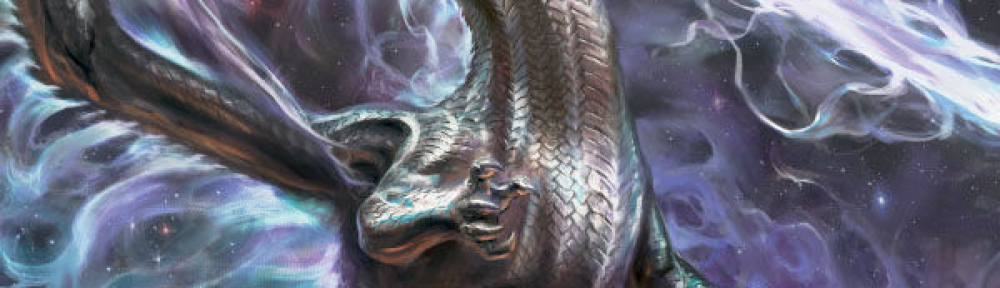
The adventure itself puts Faerûn under the shadow of a draconic apocalypse. At its center is Mordenkainen, the archmage who began as the player character of D&D co-creator Gary Gygax. He needs to regain his magic and face an ancient threat, which means assembling a party capable of venturing into unfamiliar realms. Starting a story with an enormously powerful figure who needs help gives the team plenty of room for friction, even before the dragons start making everybody’s day worse.
Two early recruits are Volothamp Geddarm, better known as Volo, and Tasha, Witch Queen of Prismeer. Together with Mordenkainen, they represent only the beginning of the group. Lanzing and Kelly say readers will meet all eight party members by the end of issue #4. That gives the opening stretch a clear promise: this is an ensemble that grows as the danger comes into focus, with more personalities still waiting to pull up a chair.
The creative team brings Ibraim Roberson and Arabson Oliveira on illustrations, Daniel Brown on colors and Hayley Rose-Lyon on lettering. Esad Ribić supplies hand-painted covers, fitting the writers’ desire for a book with the visual richness of the sourcebooks. Those credits deserve to stay together, because an ambitious fantasy comic lives through the entire team putting that world on the page.
Collectors also have special dragon foil variants by Antonio José Manzanedo to look for. Dark Horse says those editions include the dragons’ in-game statistics and lore, which gives tabletop fans another reason to inspect the cover beyond its finish. You already know somebody is going to look at those numbers and start planning an encounter their players will complain about for months.
Lanzing and Kelly want readers who have never rolled dice to feel welcome alongside the weekly players. Their point is that these famous figures still leave room for stories people have not heard, making the comic an entrance into the world as well as a return visit for longtime fans. I like that invitation. A fantasy comic should make you want to explore its world, not make you feel like you forgot to finish your homework before opening issue #1.
Dungeons & Dragons #1 is available now wherever comics are sold. Check Dark Horse Comics for the series, publisher updates and more from Horsepower, and follow Dark Horse Comics on Instagram. The writers wanted a table big enough for different generations of fans, and they have eight seats to fill. Now let’s see what happens when all that experience meets a threat that refuses to care about anybody’s character sheet.
Powered by WPeMatico