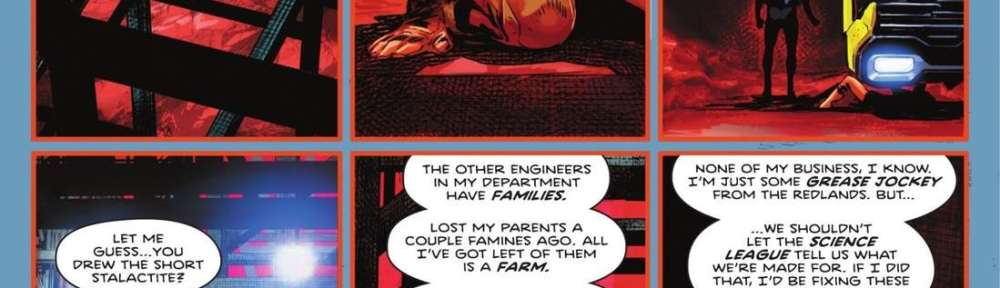
WEPAAAA! Brainiac has the nerve to turn human suffering into a little project he can explain with a smile. Fam, get this green creep away from everybody. Absolute Superman #25 brings Jason Aaron’s Get Brainiac finale to a place where the bruises are not even the worst damage on the page. The villain wants to reduce a person to something he can dismantle, rearrange and own. Superman has to survive that logic without becoming it. Juan Ferreyra, Carmine Di Giandomenico and Rafa Sandoval make this a visually ferocious issue, with enough warmth around the nightmare to keep the cruelty from swallowing the whole damn book. This one knows exactly whose humanity is under attack.
Aaron opens with Kryptonian memory and family conversation before returning us to the present crisis. Those early exchanges are affectionate, awkward and touched by the exhaustion of working people who still find a moment to joke. I enjoyed how naturally the parents occupy the scene. Their warmth gives Kal-El a history richer than a tragic fact somebody can recite in a caption. Later violence has something specific to push against: a home, a voice, a way of being loved. The issue keeps returning to that contrast without requiring every memory to deliver a speech. Even a bit of teasing can become a form of resistance when the person hurting you insists that pain is all you are.

Brainiac’s dialogue is awful in the intended way. He is chatty, possessive and delighted with his own cleverness, which makes the grotesque material feel even colder. Aaron lets him explain himself enough to expose the vanity underneath the control. This is a being who treats another person’s identity as material he has the right to edit. Superman’s refusal therefore has to involve more than strength. The issue puts pressure on his understanding of who he is and what he owes the people around him. I liked that the conflict remains rooted in character even as the machinery grows more outrageous. A giant weapon is threatening. A villain who wants you to accept his account of your life is intimate, ugly business.
Ferreyra’s contribution has a particularly sickening physical presence. His softer textures make flesh, fatigue and the unpleasant closeness of the ordeal feel almost tactile. Faces look worn by what they are experiencing. Di Giandomenico brings a sharper, more splintered energy to the hostile environments and escalating confrontation, with page shapes that feel aligned with Brainiac’s appetite for division and containment. Sandoval gives the Kryptonian passages and their relationships a solid, expressive clarity. The credits identify all three artists, and the issue benefits from their different tools. I never felt like I was looking at interchangeable labor filling pages around a script. Each visual register changes how the scene reaches you.

The shifts are not completely seamless, and readers sensitive to changing art styles may notice the joins. For me, the larger structure mostly earns them. The remembered family world, the nightmare interior and the scenes around Earth ask for different emotional temperatures. The artwork supplies them. Some of the busiest compositions still demand an extra look to track bodies and direction through the spectacle. That is my main visual reservation, particularly when the technology starts occupying every available corner. The stronger quieter panels restore orientation through faces and gestures. Those pauses are valuable because the issue spends plenty of time trying to make you feel as trapped and exhausted as its hero.
Ferreyra also handles colors on his pages, while Ulises Arreola colors the other credited sections. The resulting mix of corrosive pinks, purples, reds and unnatural greens makes Brainiac’s world feel contaminated from the inside. The warmer family moments and the quieter Earth scenes give your eyes somewhere to recover. Becca Carey’s lettering keeps the voices distinct within the barrage, especially when the villain’s talk competes with machinery, impacts and Superman’s increasingly desperate resistance. The sound effects are forceful without making the reading order disappear. This is a loud issue, visually and emotionally, but the team leaves enough control in the page design for the ugliness to have a target.

Aaron also makes room for the people outside the central confrontation, and I appreciated the way ordinary companionship carries through the aftermath. The support surrounding Superman feels imperfect and recognizable, with awkward attempts to help rather than a perfectly rehearsed inspirational response. The ending has a real emotional landing before the epilogue opens another ugly door. My reservation is how quickly some of the late action resolves after the story spends so much effort making captivity feel interminable. The reversal is exciting, yet another page of consequence in the moment could have strengthened it. This is also a finale that expects investment in the existing conflict. New readers can follow the pain, but they will miss some of the accumulated force.
Aaron puts a brutal test of identity on the page, and the art team makes the fight hurt while preserving the family warmth and stubborn compassion that give it purpose. A few crowded passages and a quick late turn keep it from a clean sweep, but the issue delivers a substantial ending with a nasty aftertaste. Superman’s decency feels hard-won here, which makes it worth caring about. Crusaders, if you have been following this arc, sit with the quieter pages after the noise stops. There is a whole life fighting back against Brainiac in this comic, and the best moments remember that a person is bigger than the worst thing done to them.
Crusaders Score:
4.5/5
Writer: Jason Aaron
Art: Juan Ferreyra, Carmine Di Giandomenico & Rafa Sandoval
Colors: Juan Ferreyra & Ulises Arreola
Letters: Becca Carey
Cover Art: Rafa Sandoval & Ulises Arreola
Publisher: DC Comics
More from Comic Crusaders: our Big 2 shelf roundup.
Powered by WPeMatico