WEPAAAA! Fam, The Crow: Flesh & Blood brings a staple gun to the resurrection party. Let that marinate. Iris Shaw gets another shot at the people who murdered her, except her body didn’t get the memo about making a full recovery. James Vance and Alexander Maleev take this three-issue 1996 story out where the roads get lonely and the neighbors know your business, then make those wide-open spaces feel like a locked room. Reading the whole thing together, you get a nasty little revenge thriller with a wounded woman driving it. Buckle up, mi gente. This ride ain’t stopping for anybody’s feelings.
Iris works for the Bureau of Land Management, and doing her job puts her in the path of men who would rather bury a problem than answer for it. A bombing kills her and other people in the federal building. She returns with the Crow beside her, carrying grief for the pregnancy that died with her, too. Vance gives us enough setup to understand the loss without parking the story for a funeral speech. You can follow this as its own complete tale. Three issues, one mission, plenty of ugly business waiting down the road.
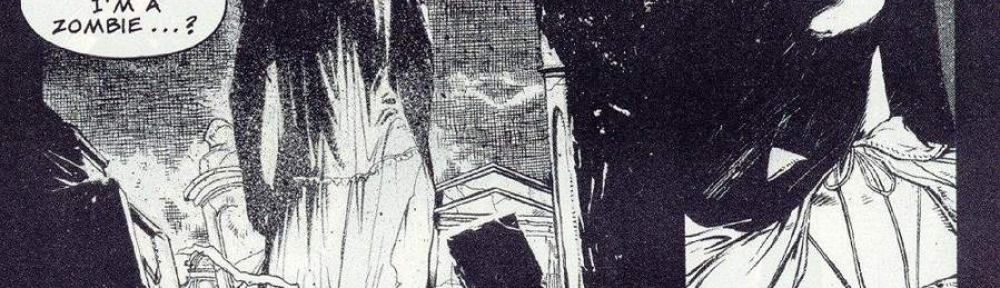
Maleev makes that road worth staring at. The buildings lean into the darkness, trees scratch across the sky, and faces emerge from slabs of black like somebody just swung a flashlight toward the wrong corner. His textures give wood, fabric, skin, and dirt their own weight. Those graveyard pages? Coño, beautiful and miserable together. Iris standing among the markers with the bird nearby belongs on a wall, preferably somewhere your relatives won’t start asking if you’re okay.

The black-and-white presentation lets Maleev get mean with the lighting. Iris’s pale face and dark clothes can take over a panel before she moves a muscle. Close-ups of her eyes carry accusation, exhaustion, or a nasty little joke; a change of angle can turn the same face from vulnerable to frightening. His wider shots give the violence room to travel, especially when vehicles get involved. Occasionally, heavy shadows swallow a bit of the physical detail, but the main action usually reads cleanly. You feel bodies occupying these rooms, instead of figures pasted over a spooky background.
Vance’s best decision is letting Iris be difficult. She’s hurt, horny, sarcastic, furious, and capable of scaring people who haven’t earned her wrath. Her visit to Rick is uncomfortable because she’s reaching for something familiar while he can barely process what’s standing in front of him. There’s bitterness beneath their intimacy, plus unfinished arguments that death somehow made worse. Nobody hands her a tidy speech to sort it out. She leaves that encounter with the damage still riding shotgun.
Her relationship with the Crow gives the book a wicked mouth. This bird keeps needling her, questioning her choices, and occasionally sounding far too entertained by the punishment. Iris pushes back. Their exchanges give the quieter travel scenes some snap, and they keep her from becoming a silent figure marching between executions. I love a horror comic that can let its lead talk a little shit without making every other balloon a punch line. Here, the humor sounds like somebody keeping herself moving because standing still would hurt worse.
The deterioration puts pressure on all of it. Iris can take damage without experiencing it the ordinary way, yet her flesh won’t repair itself. She has to hold the package together long enough to finish. That staple gun is grimy, practical, and a terrific piece of visual storytelling. Immortality with maintenance problems, fam. Vance establishes the limitation quickly, although I wanted the later stretch to squeeze that deadline harder. The concept is so nasty that it could have carried even more suspense as the hunt closes in.

Across the three chapters, the hunt moves from immediate suspects toward the men directing them. Each stop changes what Iris knows and how far she’s prepared to go. Vance also keeps other victims in her head, so the violence doesn’t shrink into a private scoreboard. The middle issue pauses to show how the killers reached this point. Some of that background comes through blunt dialogue and a compressed run of grievances; you can hear the script arranging its information. The book gets back on its feet whenever Iris walks into the room and makes somebody answer a direct question.
The villains are the weaker half of the character work. They’re threatening and convincingly cowardly when their own safety disappears, but several occupy the same loud, hateful register. Ray Henderson gets more room because his family forces a different kind of confrontation. That gives the final issue a personal pressure point beyond who can aim faster. Vance has also planted enough of Iris’s unfinished grief for her decisions there to feel connected to the woman we met earlier. I’m leaving the particulars alone. Read the ending yourself.

Dan Burr’s lettering holds its ground in some seriously crowded darkness. The dialogue stays legible against Maleev’s rough textures, with emphases that help the arguments sound heated instead of merely wordy. Gunfire and impact effects give the action a hard crack across the page. There is no interior colorist to credit in this black-and-white presentation; the blacks, hatching, and open paper handle the tonal work. J. O’Barr’s credited cover art supplies a separate painted invitation into the nightmare. The full creative package earns its flowers, not just the names on the front.
The supporting villains could use more variety, and the decaying-body deadline has untapped menace, but Iris gives the familiar revenge machinery a pulse it shouldn’t technically possess. Maleev brings the dirt, Burr keeps the pages talking, and Vance lets the grief stay messy through the gun smoke. Dig these three out together, fam. Iris Shaw came back with unfinished business and office supplies, and those fools should’ve stayed out of her way.
CRUSADERS SCORE:
4/5
The Crow: Flesh & Blood #1–3 (1996)
Script: James Vance
Art: Alexander Maleev (Alex Maleev)
Lettering: Dan Burr
Cover art / The Crow creator: J. O’Barr
Publishers: Kitchen Sink Press / Top Dollar Comics
Interior format: Black and white
Powered by WPeMatico